I always have heap of precious scrap wire from my amps that goes in the trash, so I decided to give it a better use this time by making a festive USA flag. It is made out of 20 AWG 600V PVC insulated stranded wire. Enjoy and have a safe 4th!
Posted in Uncategorized | Comments Off on Happy 4th and a 20 AWG Wire USA Flag
“Hey John, which one is the Volume?” said the confused guitar player starring at the amp chassis… So, you finished your amp project, sounds wicked and all that, but it sits bare naked on top of an extension cabinet or best, housed in a cabinet with Sharpie marked labels for the controls. Nice, but your amp deserves to be more elegant and sexy. After all it brews some real tone.
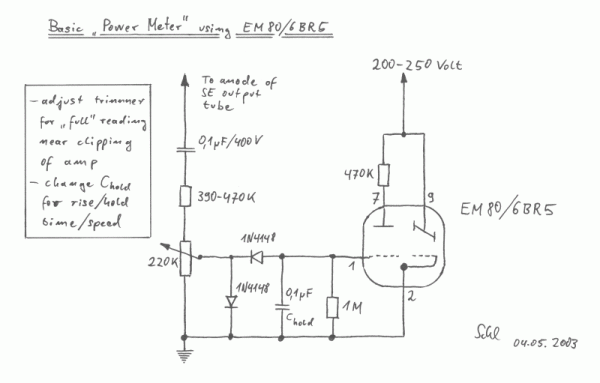
I couldn’t control myself. After seeing these cool demos of the Magick Eye tube, (a tube commonly used as a tuning indicator in old radios) I had to try them out in my amps. So I plopped together a quick video to see the dramatic and cool visual effect. I will probably tweak some values but overall I am very happy with the visual effect.
The circuit is nothing complicated. All you need is one of the many Magick Eye tubes existent out there, with many different beam patterns, that might need a slightly different pin-out connection, but all of them work in a main common way – it taps in the path of the signal level of roughly 10 to 25 Volts (depends on the type of tube used), and a high DC voltage of something between 200 to 250 (B+).
I used a Russian EM80/6BR5 I scored off Ebay. The EM80 tube has a “U” shaped fluorescent target and two rods connected to the anode, producing two angled shadows on the edge triggered by the control voltage (input signal).





 Facebook Page
 Flickr Photos Sets
 Twitter
 YouTube Channel
 Subscribe to SGT!